
CORPORATE
CERTIFICATIONS

Why Certifications Matter
Corporate certifications matter because they demonstrate JASINT’s commitment to industry best practices in quality, security, and process maturity. These certifications assure our clients, partners, and governing and regulatory bodies that JASINT operates with a high level of consistency, accountability, and risk management. They also enhance JASINT’s competitiveness within the market, making JASINT a preferred prime and/or partner, as each certificate serves as a prerequisite for government contracts and partnerships with large enterprises.
CMMI
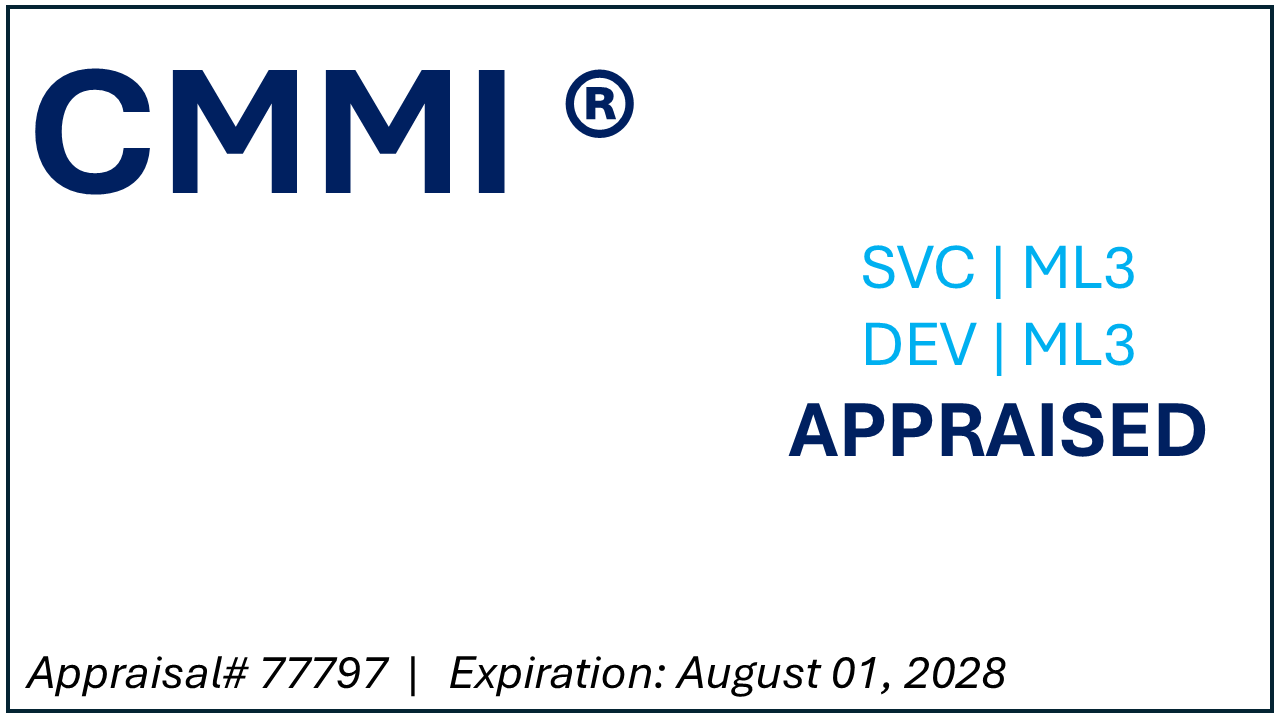
During a CMMI Level 3 appraisal for both Services (SRV) and Development (DEV), evaluators assess the organization’s capability to implement and institutionalize well-defined, standard processes across projects and service engagements. This includes evaluating how processes are documented, followed, and improved over time, with a focus on areas such as project and service management, requirements development, technical solution, risk management, service delivery, and process quality assurance. Appraisers examine organizational process assets, performance baselines, and tailoring guidelines to ensure consistency and adaptability across teams. For Level 3, the emphasis is on establishing proactive, integrated processes that are guided by organizational standards rather than ad hoc practices. Additionally, the audit looks at how the organization uses data and metrics to manage quality and performance, engages stakeholders, and fosters continuous improvement through lessons learned and root cause analysis
CMMC
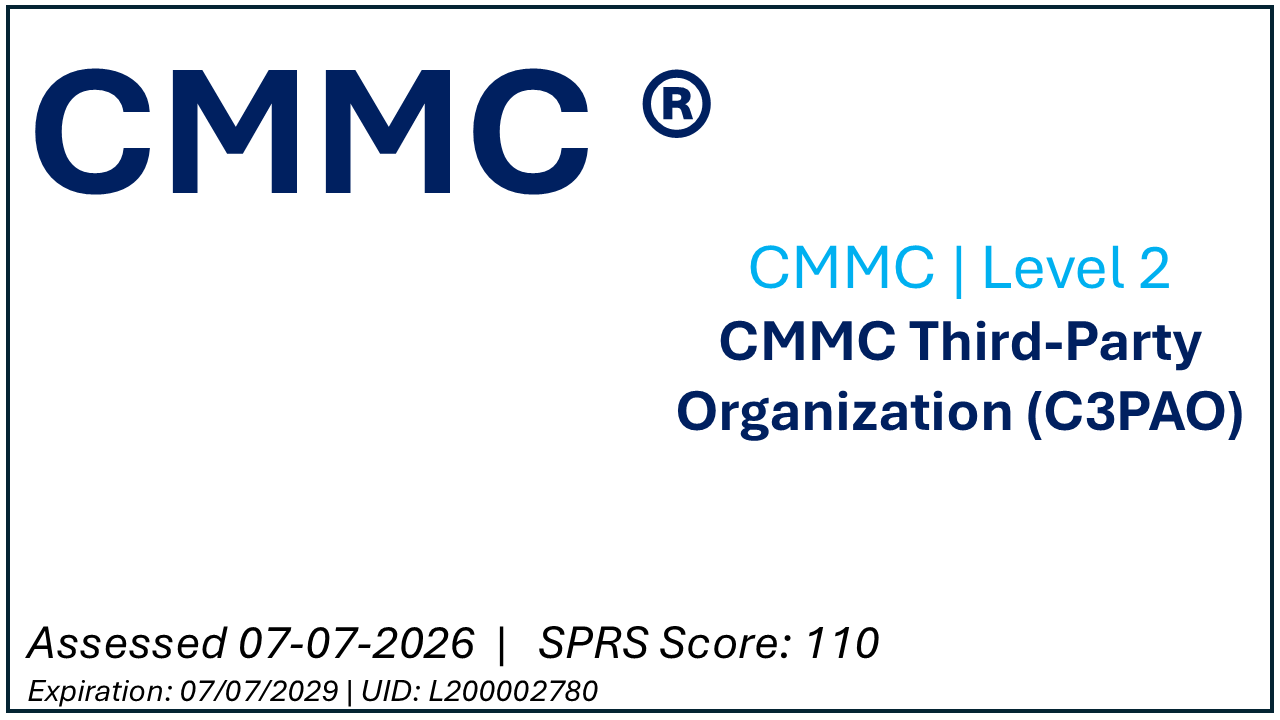
During a CMMC (Cybersecurity Maturity Model Certification) Level 2 Certification Assessment, an independent Certified Third-Party Assessment Organization (C3PAO) evaluates whether an organization has effectively implemented the 110 security requirements of NIST SP 800-171 Rev. 2 to protect Controlled Unclassified Information (CUI) within the organization’s assessment scope. The assessment spans the fourteen NIST control families: Access Control, Awareness and Training, Audit and Accountability, Configuration Management, Identification and Authentication, Incident Response, Maintenance, Media Protection, Personnel Security, Physical Protection, Risk Assessment, Security Assessment, System and Communications Protection, and System and Information Integrity. The C3PAO validates implementation through a comprehensive review of objective evidence, including documentation, technical demonstrations, interviews with personnel, and direct observation of security practices. Assessors verify that security controls are not only implemented but are operating effectively and consistently to satisfy each applicable security requirement. Successful completion of the assessment provides the basis for CMMC Level 2 (C3PAO) certification, demonstrating the organization’s ability to adequately safeguard Controlled Unclassified Information in accordance with Department of War cybersecurity requirements.
ISO 9001
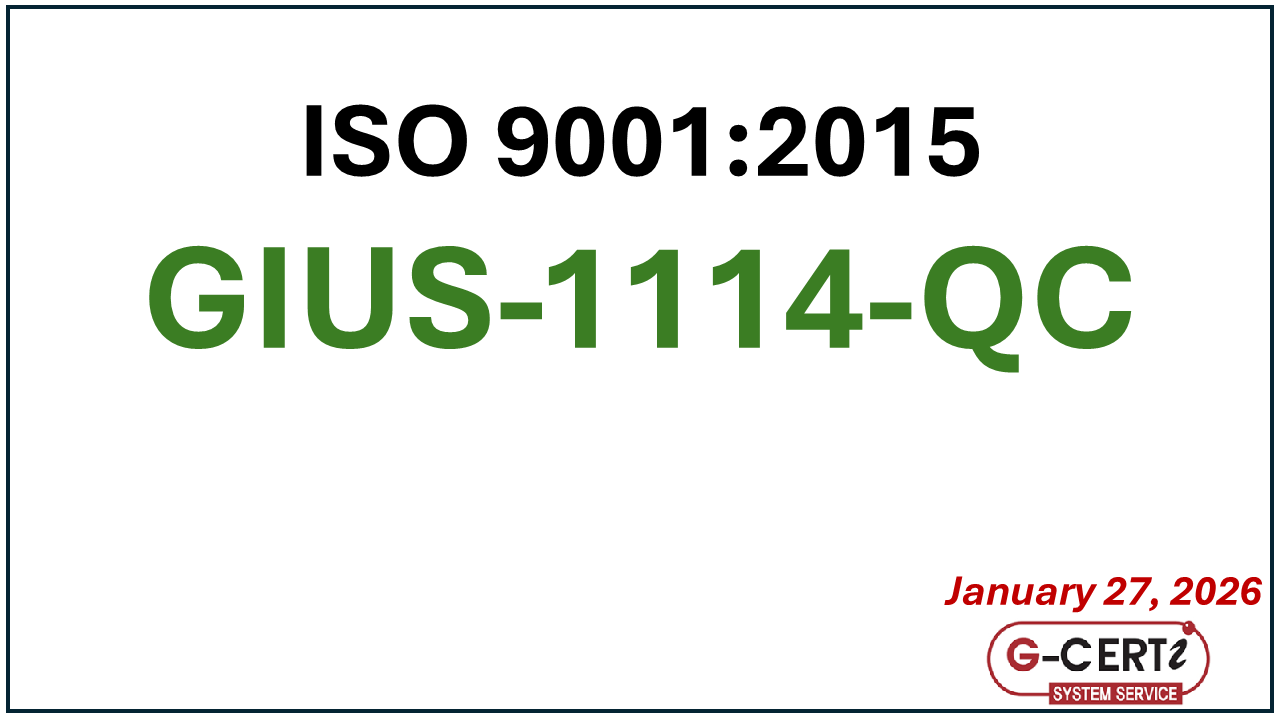
During an ISO 9001:2015 certification audit, auditors evaluate the organization’s Quality Management System (QMS) to ensure it meets this standard’s requirements. This includes reviewing leadership commitment, the context of the organization, and how risks and opportunities are identified and managed. Auditors assess how customer requirements are determined and met, how quality objectives are set and tracked, and how the organization ensures competence, awareness, and communication. They also examine operational planning and control, including design and development (if applicable), production and service provision, and control of externally provided processes. Performance evaluation is reviewed through internal audits, management reviews, and the use of data to drive continual improvement. Documented information, including procedures and records, is checked for adequacy and compliance, and the organization’s ability to monitor customer satisfaction and handle nonconformities effectively is closely scrutinized.
ISO 27001
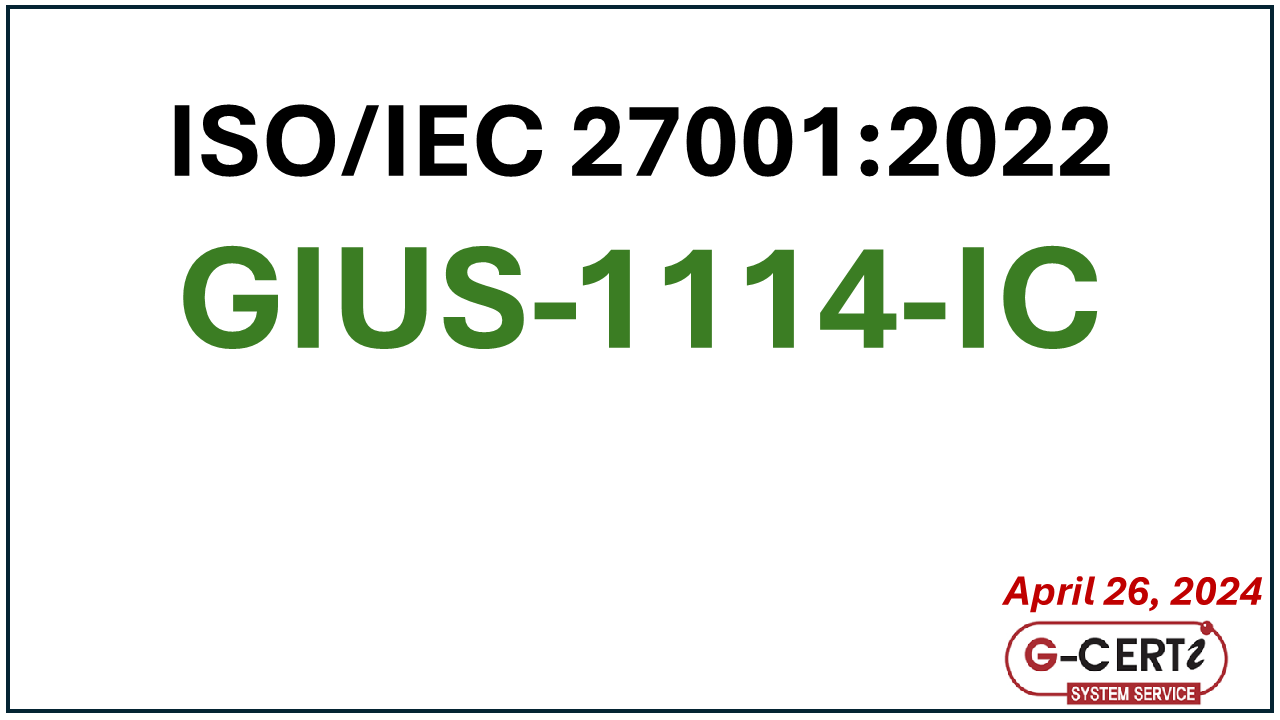
During an ISO/IEC 27001:2022 certification audit, auditors evaluate the organization’s Information Security Management System (ISMS) to ensure it effectively manages information security risks and complies with the standard’s requirements. This includes assessing the organization’s context, leadership commitment, risk assessment and treatment processes, and how information security objectives are established and monitored. Auditors examine the implementation of the 93 Annex A controls (formerly 114 in the 2013 version), covering areas like access control, cryptography, physical security, operations security, supplier relationships, and incident response. They also review documented policies and procedures, how legal and regulatory requirements are identified and met, and the effectiveness of internal audits, management reviews, and continual improvement activities. Additionally, they verify that employees are aware of their roles in protecting information and that appropriate technical and organizational controls are in place to ensure the confidentiality, integrity, and availability of information assets.